

Snow, slush, road salt and freezing temperatures are hard on a mobility scooter, and on the person riding it. A little care through the winter keeps your scooter running, protects the battery, and helps you stay safe and independent until spring.
These are the tips our product specialists give customers every winter in the GTA. They work for any brand, but always check your owner’s manual for anything specific to your model.
Key takeaways
- Cold weather shortens your battery range. Charge indoors and plan shorter trips.
- Road salt causes rust and corrosion. Wipe your scooter down after every winter ride.
- Scooters aren’t built for deep snow or ice. Stick to cleared, salted paths.
- Store your scooter indoors if you can, and keep the battery topped up.
- If you’ll ride all winter, four wheels, larger tires, suspension and good lights make a real difference.
1. Battery care in the cold
The battery is the part of your scooter that feels winter the most. Cold slows down the chemical reaction inside it, so a fully charged battery won’t take you as far in January as it does in July.
- Charge indoors, at room temperature. Charging a cold battery is slower and less effective. Lithium batteries in particular shouldn’t be charged below freezing.
- Charge after every ride. Don’t wait for the battery to run low. Keeping it topped up helps it last longer.
- Plan shorter trips. Expect less range than usual, and leave yourself a buffer to get home.
- Don’t leave it in the cold. Avoid leaving your scooter in an unheated garage, shed or car for days at a time. Bring it, or at least the battery, inside.
- Watch for warning signs. If your range drops sharply or the battery won’t hold a charge, it may be time for new batteries. Call us and we can help you check.
2. Salt, slush and cleaning
Road salt is the biggest enemy of your scooter’s frame, wiring and connectors. Salty slush gets into every gap and causes rust and corrosion if it’s left to dry.
- Wipe the scooter down with a damp cloth after every winter ride, then dry it well, especially the wheels, frame and floorboard.
- Never use a hose or pressure washer. Water can get into the motor and electronics.
- Let snow and ice melt off indoors on a mat or towel, then dry the scooter before you charge it.
- Check the battery terminals, plugs and wiring for white or green build-up, a sign of corrosion.
- Make sure the brakes, throttle and freewheel lever move freely and aren’t sticking in the cold.
3. Tires and traction
Most scooters have either solid tires or pneumatic (air-filled) tires. Both need a bit more attention in winter.
- Pneumatic tires: cold air lowers tire pressure, so check it every week or two and fill to the pressure printed on the tire. Properly inflated tires grip better and give you more range.
- Solid tires: no pressure to check, but clean the salt and slush off them and look for cracks or worn tread.
- Worn tires lose grip quickly on wet or slushy ground. If the tread is smooth, it’s time to replace them before you head out.
No tire makes a mobility scooter safe on ice or in deep snow. Good tires help on wet and slushy sidewalks, but the best protection is choosing your route carefully.
4. Riding safely in snow and ice
Winter in Toronto, Ottawa or anywhere in Canada means uneven, snowy sidewalks and curb cuts blocked by snowbanks. A few habits make a big difference:
- Check the weather before you go out, and skip the trip during a storm, freezing rain or extreme cold.
- Stick to cleared and salted sidewalks and paths. Avoid steep slopes, unshovelled sidewalks and icy patches.
- Slow down and avoid sharp turns. Stopping takes longer on wet or slushy ground.
- Never try to drive over a snowbank or through deep snow. You can get stuck or tip over.
- Turn on your lights, even during the day. Reflective strips, a safety flag and bright clothing help drivers see you.
- Dress warmly, with gloves you can still use the controls in, and keep a lap blanket handy.
- Always carry a charged phone, and let someone know where you’re going.
5. Storing your scooter for winter
If you won’t use your scooter until spring, store it properly so it’s ready to go when the snow melts.
- Store it indoors in a dry place, away from extreme cold. A heated garage, basement or spare room is ideal.
- Clean and dry it fully before storing, so salt doesn’t sit on it for months.
- Charge the battery fully before storing, then top it up at least once a month. A battery that sits empty all winter may not recover.
- If it has to stay outside, a garage or a small, dry shed is far better than leaving it in the open. Use a waterproof scooter cover either way, and bring the battery inside.
- Before your first spring ride, check the tires, brakes and lights, and give the battery a full charge.
6. Choosing a scooter for Canadian winters
If you plan to ride through the winter, some features help more than others:
- Four wheels are more stable than three on uneven, slushy sidewalks.
- Larger tires, especially pneumatic ones, handle cracks, bumps and slush better than small solid tires.
- Suspension smooths out rough, frozen sidewalks.
- Bigger batteries give you extra range to make up for what the cold takes away.
- LED lights help you see and be seen on short winter days.
Two of our popular options for year-round riders:
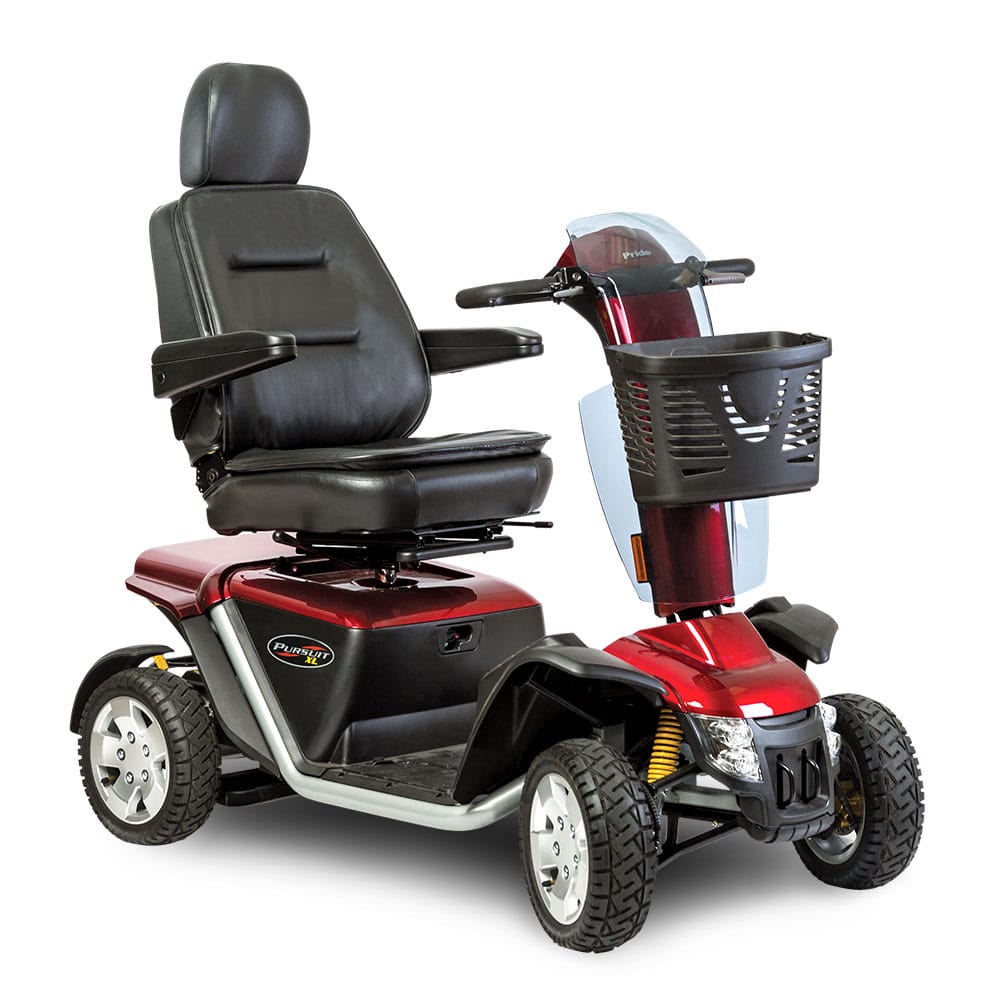
Pride Pursuit XL 4-Wheel Scooter
13″ pneumatic tires, full suspension, an LED lighting package, and up to 48 km per charge with the larger batteries.
Best for: longer trips and rougher sidewalks

Pride Victory 10 LX with CTS Suspension
A mid-size four-wheel scooter with suspension and LED lighting that comes apart for the trunk.
Best for: everyday errands around town
See all our mobility scooters, or read how much a mobility scooter costs in Canada to compare prices.
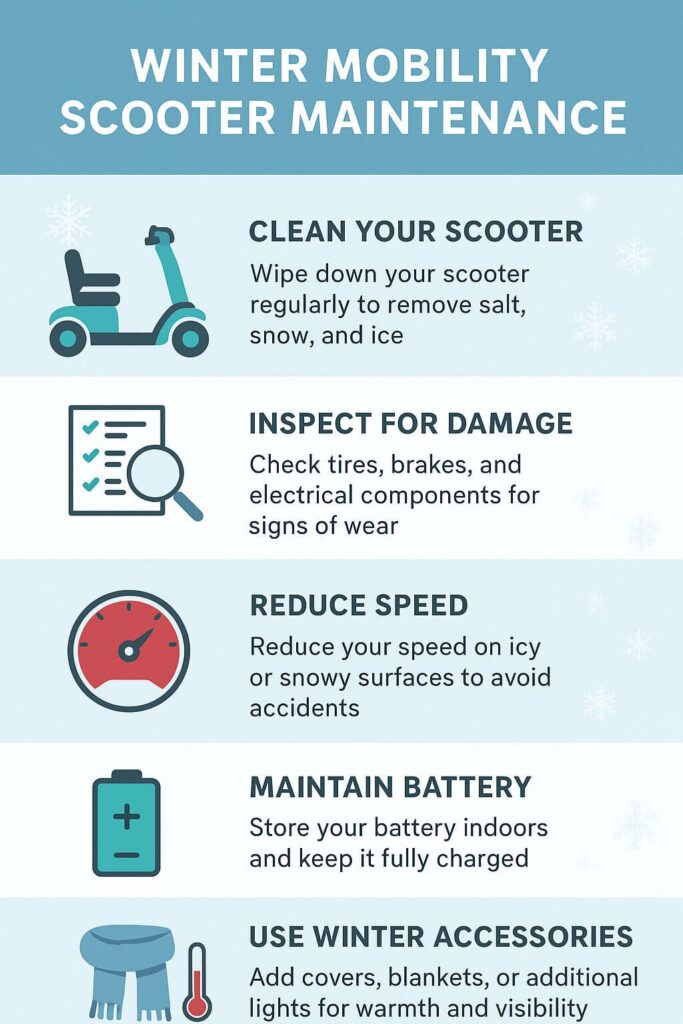
Your winter scooter checklist
| When | What to do |
|---|---|
| Before each ride | Check the weather, battery charge and lights. Plan a route on cleared paths. |
| After each ride | Wipe off salt and slush, dry the scooter, then charge it indoors. |
| Every week or two | Check tire pressure (pneumatic tires) and look for worn tread. |
| Every month | Look for corrosion on the battery terminals and wiring. Check brakes and controls. Top up the battery if the scooter is in storage. |
| In spring | Give it a full clean, check tires, brakes and lights, and fully charge the battery. |
Questions about your scooter this winter?
Our product specialists can help with batteries, tires and choosing the right scooter. We offer on-site tech support and home visits throughout the GTA for scooters bought from us.
Frequently asked questions
Can I ride my mobility scooter in the snow?
You can ride on cleared and salted sidewalks and paths, but mobility scooters aren’t built for deep snow or ice. Avoid unshovelled sidewalks, snowbanks and steep or icy slopes.
Does cold weather drain a mobility scooter battery?
Yes. Cold temperatures reduce how far you can go on a charge. Charge indoors at room temperature after every ride, and plan shorter trips in the winter.
Can I leave my mobility scooter outside in the winter?
It’s best not to. Store it indoors in a dry place if you can. If it has to stay outside or in an unheated garage, use a waterproof cover and bring the battery inside.
How do I clean road salt off my scooter?
Wipe it down with a damp cloth after every ride, then dry it well. Don’t use a hose or pressure washer, since water can get into the motor and electronics.
How should I store my scooter battery over the winter?
Charge it fully before storing, keep it somewhere above freezing, and top it up at least once a month. Check your owner’s manual for anything specific to your battery type.
Can I put snow chains on a mobility scooter?
We don’t recommend it. Most mobility scooters aren’t designed for snow chains, and they can rub against the frame or affect steering and braking. Check your owner’s manual, or ask us before adding anything to your tires.
Also read: Benefits of owning a folding mobility scooter for travel